Living with chronic neck pain or a shooting "electric" sensation in your arms can make even the simplest tasks feel impossible. If you’ve been told that a herniated disc is the culprit and medications are no longer cutting it, you might be looking into Anterior Cervical Discectomy and Fusion (ACDF).
In Noida, this procedure has become a cornerstone of advanced spine care. It’s a reliable way to stop nerve compression at the source and get back to a life that doesn't revolve around pain management.
To put it simply, ACDF is a two-part surgery designed to stabilize your neck and relieve pressure on your nerves.
This surgery isn't just about "fixing a bone"—it’s about restoring neurological health. It is typically the go-to solution for:
If you’re planning your surgery at one of Noida’s specialty hospitals, here is the roadmap:
Under general anesthesia, a small horizontal incision is made (usually in a natural skin fold to minimize visible scarring). The surgeon carefully moves the windpipe and esophagus aside to get a clear view of the vertebrae.
Using a surgical microscope, the surgeon removes the worn-out disc and any bone spurs that are pressing on your nerves. Most patients feel the "relief" from nerve pain almost immediately after waking up.
A spacer (bone graft or cage) is placed in the gap. A small titanium plate and screws are usually fixed over the area to act as an internal splint while your bones naturally grow together over the coming months.
The recovery for ACDF is often faster than people expect.
Noida has rapidly evolved into a medical hub, offering high-end spinal care that rivals international standards. Patients here benefit from:
Deciding on spine surgery is a significant choice. ACDF has a very high success rate for relieving arm pain and preventing permanent nerve damage. If you're struggling with cervical issues, scheduling a consultation with a local specialist can help you determine if this is the right path to getting your mobility back.
India’s leading specialists.
MS (General Surgery), MBBS
Neurosciences
Neurosurgery
MBBS, MS, MCh (Neurosurgery)
Neurosciences
Neurosurgery
MBBS, DNB (Neurosurgery), FINR (France)
Neurosciences
Neurosurgery
Interventional Spine
Neurointervention
MBBS, MS, MCh (Neurosurgery)
Neurosciences
Neurosurgery
MBBS, MS, MCh (Neurosurgery)
Neurosciences
Neurosurgery
MBBS, MS, MCh (Neurosurgery)
Neurosciences
Neurosurgery
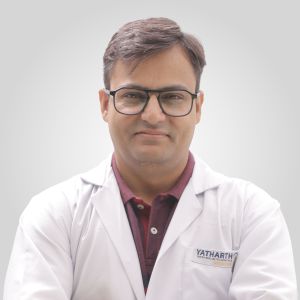
MBBS, MS (General Surgery), MCh (Neurosurgery)
Neurosciences
Neurosurgery
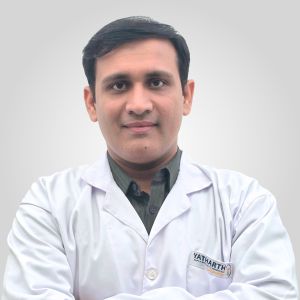
MBBS, MS (General Surgery) MCh & DrNB (Neurosurgery), FPNS, AFAMS, MNAMS, FAIS, AIIMS & NIMHANS
Neurosciences
Neurosurgery
Becoming a mother again at 40 was emotional, but I felt completely safe in the hands of Dr. Sonal Bathla. Nancy Chadha shares her...

Becoming a mother again at 40 was emotional, but I felt completely safe in the h...

This video highlights the successful outcome of a Complex Total Knee Replacement...

Meet Mr. Satish Chand Chawla, who underwent HOLEP – Holmium Laser Enucleation ...
Meet Mrs. Nirmala Singh, who underwent a Successful Vaginal Hysterectomy Prolaps...
Mr. Sanjay Kaushik’s journey is a powerful story of hope and recovery after ba...
Minimally invasive spine surgery (MISS) allows spine surgeons to access the spine without damaging any local muscles and...
International Epilepsy Day 2026 is recognized worldwide to raise awareness about epilepsy, one of the most common neurol...
World Spine Day 2026 will be observed on Friday, October 16, 2026, with the theme “Spine Health for Life.” The campa...